

|
Getting your Trinity Audio player ready...
|
B2B companies face a major challenge in 2026. Buyers are more informed, competition is stronger, and traditional outreach methods are becoming less effective.
Decision makers no longer rely on sales representatives as their primary source of information. Instead, they research independently. They read blogs, compare vendors, analyze case studies, and evaluate products long before speaking with a sales team. This shift has forced companies to rethink their B2B lead generation strategy.
Random cold outreach and broad advertising campaigns rarely deliver consistent results anymore. Businesses now need targeted and data-driven B2B lead generation strategies that focus on the right accounts and the right timing.
When done correctly, B2B lead generation creates a predictable pipeline of qualified prospects that supports long-term business growth.
This article explores what is B2B lead generation, the most effective lead generation strategies in 2026, and practical insights on how to generate B2B leads consistently.
Let’s get started!
What is B2B Lead Generation?
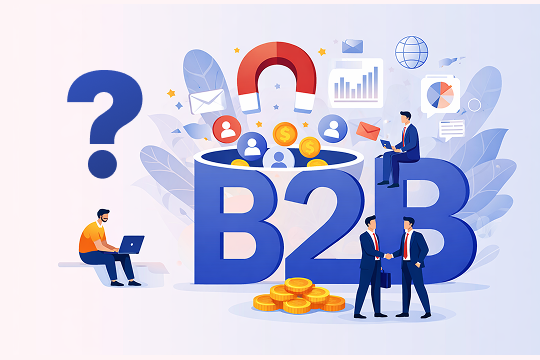
B2B lead generation is the process of identifying and attracting businesses that may need your products or services. These businesses become potential customers once the right decision-makers are identified and engaged for sales or a partnership.
Unlike B2C marketing, where purchases are often quick and emotional, B2B buying decisions involve multiple stakeholders, longer evaluation cycles, and significant financial considerations.
Because of this complexity, successful B2B lead generation strategies focus on building relationships rather than pushing immediate sales.
The process typically involves several stages:
- Identifying the ideal customer profile
- Collecting accurate contact information
- Reaching out through targeted campaigns
- Nurturing prospects through educational content
- Converting leads into sales opportunities
Companies that develop a structured B2B lead generation strategy are far more likely to build a strong and sustainable sales pipeline.
Why B2B Lead Generation Matters More Than Ever
The digital buying journey has fundamentally changed how businesses discover solutions in 2026.
Today’s buyers expect vendors to understand their challenges before initiating contact. Generic messaging no longer works because buyers receive dozens of similar pitches every week.
This is why businesses must adopt smarter lead generation strategies that focus on relevance and timing.
Effective B2B lead generation strategies help companies reach decision makers earlier in the buying journey, build credibility with valuable insights, increase engagement with potential customers, improve conversion rates, and create predictable revenue growth. With these goals in mind, the next question is clear.
With that, let’s find out what strategies actually work in this digitized era of marketing!
The Most Effective B2B Lead Generation Strategies in 2026

No single tactic can generate consistent results. Instead, successful organizations combine multiple channels and approaches to create a balanced lead generation ecosystem.
The following B2B lead generation tactics are widely used by high-growth companies because they focus on both visibility and engagement. Each strategy plays a different role in building a reliable, qualified lead pipeline.
1. Content Marketing for B2B Lead Generation
Content marketing remains one of the most reliable ways to attract potential customers. However, simply publishing blog posts is not enough. Content must address the real questions buyers ask during their research phase.
When businesses create educational and solution-focused content, they position themselves as industry authorities. This trust often becomes the first step in the lead generation journey.
Some of the most effective content formats include:
- Long-form educational articles
- Industry reports and whitepapers
- Case studies that demonstrate results
- Practical guides and tutorials
- Product comparison resources
These assets naturally attract prospects who are actively searching for solutions.
For companies focused on B2B SaaS lead generation, content marketing also plays an important role in search engine visibility. High-quality content allows businesses to rank for important industry keywords and generate organic leads over time.
2. Email Marketing for B2B Lead Generation
While new marketing channels continue to emerge, email remains one of the most effective tools for email marketing B2B lead generation. The reason is simple. Email provides direct access to decision makers.
However, successful email campaigns depend heavily on data quality. Companies must rely on accurate B2B email lists that contain verified contact information of B2B decision-makers & professionals in relevant roles.
Once the right contacts are identified, effective email campaigns focus on delivering value rather than pushing sales messages.
If you’re wondering about high-performing email campaign strategies, start with the basics: personalized subject lines, relevant industry insights, case studies with measurable results, and invitations to webinars or product demos.
When businesses pair well-segmented B2B email lists with personalized messaging, email becomes a powerful engine for lead generation.
3. LinkedIn as a Lead Generation Channel
Social media platforms vary widely in their effectiveness for B2B marketing. Among them, LinkedIn stands out as the most valuable platform for connecting with professionals and decision makers.
LinkedIn works particularly well because it allows companies to reach individuals based on their job role, industry, and professional interests.
Businesses often use LinkedIn as part of broader B2B lead generation ideas that combine content sharing with direct engagement.
Here are some of the effective LinkedIn strategies:
- Publishing thought leadership posts & engaging with industry discussions
- Running targeted LinkedIn advertising campaigns through the custom audiences feature
When combined with email outreach, LinkedIn helps create multiple touchpoints with prospects. This repeated exposure increases trust and improves the chances of starting meaningful conversations.
4. Account-Based Marketing
Many organizations are shifting from broad marketing campaigns to highly targeted strategies, with account-based marketing (ABM) being one of the most successful approaches. Rather than targeting thousands of random companies, ABM focuses on a smaller list of high-value accounts.
This approach enables marketing and sales teams to work closely together, creating personalized campaigns for each target organization. A strong B2B lead generation strategy using ABM often includes personalized outreach to key stakeholders, targeted advertising campaigns, custom content tailored to specific industries, and sales and marketing alignment around priority accounts.
By focusing resources on the right companies, businesses can boost engagement and improve the chances of closing deals.
5. Understanding Intent Signals
Intent signals provide valuable insights into a prospect’s readiness to buy. By tracking online behaviors such as searching for specific solutions, reading competitor reviews, or engaging with targeted content, businesses can identify when an account is in the decision-making phase. These signals allow marketing and sales teams to prioritize outreach to the right prospects at the right time.
By understanding and acting on intent signals, companies can create more relevant, timely, and impactful interactions, leading to higher engagement and improved conversion rates.
B2B Lead Generation Best Practices for 2026

While strategies provide the overall direction, execution determines success. Businesses that consistently generate leads often follow a set of proven B2B lead generation best practices.
First, data accuracy must always be a priority. Outdated contact information leads to wasted outreach and poor campaign performance.
Second, companies should focus on personalization. Decision makers respond better to messages that reflect their industry challenges.
Third, businesses must combine multiple channels instead of relying on a single tactic. Email, LinkedIn, content marketing, and advertising should work together.
Finally, marketing and sales teams must collaborate closely. Lead generation efforts are most effective when both teams share the same goals and data.
These B2B lead generation tips ensure that campaigns remain efficient and scalable.
Also read – Sales and Marketing Operating in Silos? Here’s How to Bridge the Gap
How Outsourced B2B Lead Generation Can Accelerate Growth
Many companies struggle to maintain consistent lead generation because it requires significant resources. Building accurate databases, managing campaigns, and nurturing prospects all require time and expertise.
For this reason, many organizations choose outsourced B2B lead generation services. Hence, outsourcing allows companies to access experienced teams that specialize in data research, prospect identification, and targeted outreach.
Instead of building internal infrastructure from scratch, businesses can leverage external expertise to scale their lead generation efforts faster. This approach is particularly beneficial for startups, SaaS companies, and organizations entering new markets.
How Span Global Services Supports B2B Lead Generation

Companies looking to scale their lead generation efforts often need reliable data and targeted outreach strategies. This is where Span Global Services plays an important role.
Span Global Services specializes in providing high-quality B2B email lists, tech B2B contact lists, and verified decision-maker data that help companies reach the right audience.
Their services support businesses that want to improve B2B SaaS lead generation, enhance email marketing for B2B lead generation, and build a stronger qualified lead pipeline.
With accurate data and industry-specific targeting, businesses can:
- Connect with relevant decision-makers
- Improve campaign performance
- Increase engagement & response rates
- Generate more qualified leads along with business deals
For organizations focused on scaling their marketing and sales outreach, partnering with a data-driven provider like Span Global Services can significantly improve results.
Conclusion
B2B lead generation continues to evolve as buyer behavior and technology change. Companies that rely on outdated methods struggle to generate consistent results. Those that adopt modern B2B lead generation strategies gain a significant advantage.
Successful organizations combine multiple lead generation strategies, including content marketing, email outreach, LinkedIn engagement, and account-based marketing. They also prioritize accurate data and personalized communication in any form of marketing.
Therefore, if you are aiming to become a successful organization, implementing a structured B2B lead generation strategy is vital. Partnering with reliable B2B data providers like Span Global Services can help your marketing achieve a predictable pipeline of qualified prospects and sustainable growth.
FAQs
1. Explain B2B lead generation in simple terms?
B2B lead generation is when a company seeks potential customers from other businesses to boost sales or form collaborations. These businesses, which are a good fit for what you offer, are considered prospects. Essentially, it’s about identifying the right businesses, building relationships, and guiding them until they become actual customers.
2. How do companies generate B2B leads?
Businesses generate B2B leads through multiple channels such as content marketing, email campaigns, LinkedIn outreach, advertising, webinars, industry events, etc. Combining these channels creates a strong lead generation strategy.
3. Why is data important in B2B lead generation?
Accurate contact data and intent data ensure that marketing campaigns reach the correct decision-makers. Poor quality data leads to wasted outreach, low engagement rates, and higher acquisition costs.
4. What are the best B2B lead generation strategies in 2026?
Some of the most effective strategies include content marketing, account-based marketing, LinkedIn engagement, targeted email campaigns, and data-driven prospect targeting.
5. Should companies outsource B2B lead generation?
Outsourcing can help businesses scale faster by providing access to experienced teams and verified contact databases. It allows companies to focus on closing deals while experts handle prospect identification and outreach.